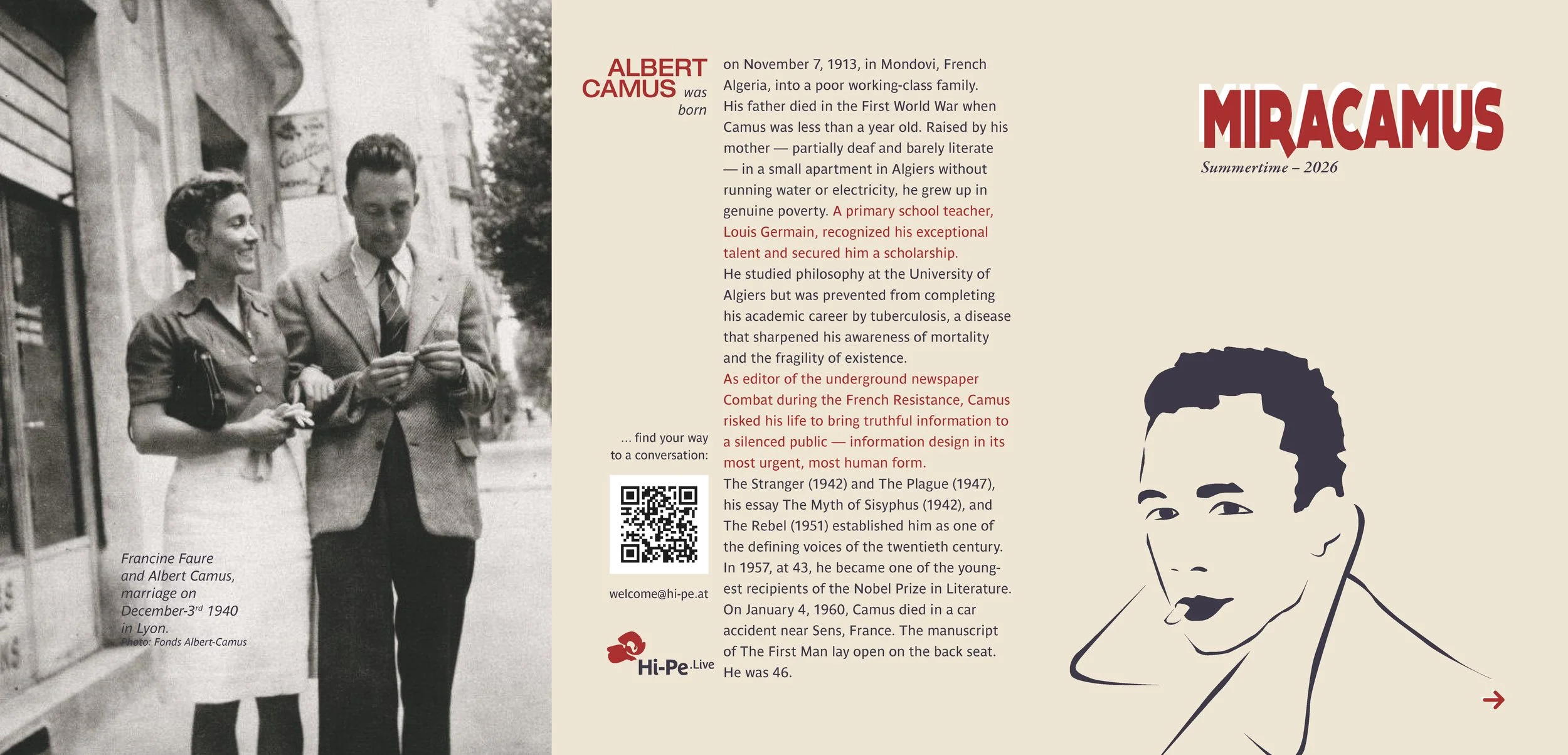
The fascinating intersection of information design and Albert Camus The connection between these two fields runs deeper than it might first seem. Camus was preoccupied with the problem of clarity — how does one communicate an essentially irrational, chaotic universe in a form that humans can grasp and live with? That is, at its core, also the central problem of information design.
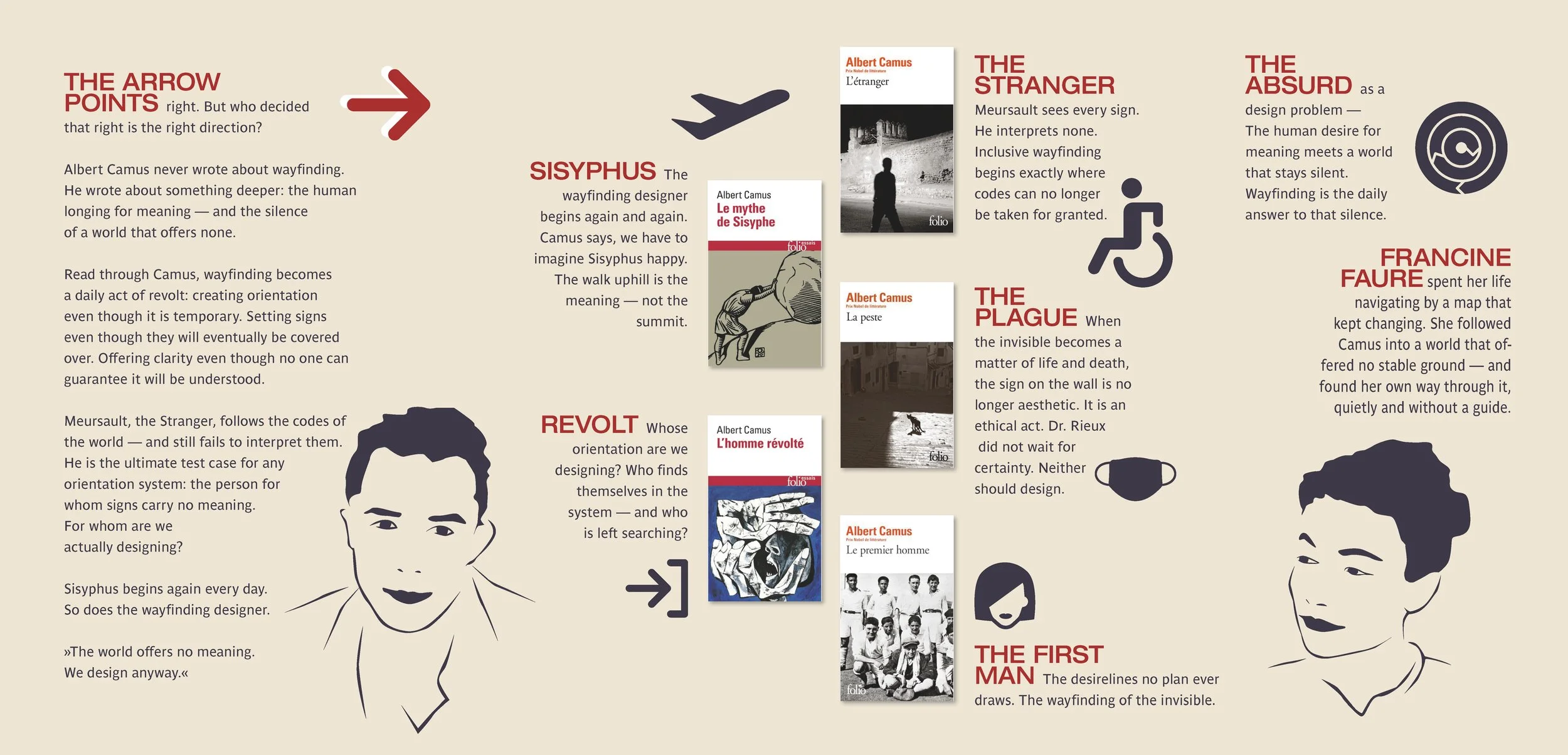
The Absurd as a design problem. For Camus, the Absurd arises from the collision between humanity's hunger for meaning and the universe's silence. Information designers face an analogous tension: raw data is meaningless noise; the human mind demands pattern and narrative. The designer, like Camus's absurd hero, must work in full awareness that the "order" they create is imposed, not discovered — yet they must create it anyway.
Sisyphus and the dashboard. Camus famously ends The Myth of Sisyphus by telling us we must imagine Sisyphus happy. The designer's work is similarly Sisyphean: every visualization is an interpretation that will be revised, recontextualized, or discarded. The ethical response Camus would recognize is not despair, but engagement — full presence in the act of making meaning, without illusions about its permanence.
Revolt, freedom, passion. Camus's three responses to the Absurd translate surprisingly well into design ethics: revolt (refuse false clarity, don't simplify what is genuinely complex), freedom (resist the temptation of a single authoritative reading), and passion (bring full commitment to the work, knowing it is provisional).
Prose as design. Camus was himself a masterful information designer in a literary sense — L'Étranger strips language to its barest structure, creating meaning through what is withheld as much as what is shown. This is a lesson in negative space that any visual designer would recognize.
Albert Camus in Information Design is also available as a lecture and workshop..